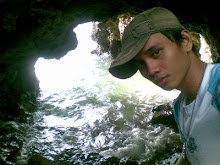
LAKE SEBU, SOUTH COTABATO (December 23, 2007)—I keep telling myself I have to come back here and explore again every natural nook and countryside cranny.
I cannot get enough of this place. We’re staying at Punta Isla Lake resort for several hours only and that time is never enough to savor everything the getaway has to offer. Add to that the dizziness in my head, courtesy of our previous night’s videoke-and-booze session, after my cousin’s wedding.
It doesn’t matter that I have not taken a bath. (When my cousins and I woke up, half of the party has packed up, so we had to wash our faces in a jiffy and rush to the vehicles.) The temperature of Lake Sebu ranges from cool to cold to chilly. You’ll only sweat if you run the hills or paddle a kayak across the lake.

The entrance fee at Punta Isla is only five pesos per head, and the clan or gang can rent a hut for a hundred.
A group of young T’bolis goes from cottage to cottage to entertain the guests. The presentation, lasting for about six minutes, is a sampler of indigenous music and dances.
Kids gleefully scamper away during the monkey dance, as a midget, covered in a black hairy costume, leaps out and clings to the posts of the cottage.
GUSTATORY INDULGENCE

The Lake Sebu experience is not complete without filling your belly with tilapia, the kind of fish the place is most known for. It’s prepared and cooked in various ways: grilled, chicharon or paksiw.
Grilling brings out the natural milky taste and color of tilapia. Dip it in soy sauce with lots of onion and tomato slices and you have the perfect pair for rice. When cooked as chicharon (dried and fried), tilapia satiates the palate like no other meat can. It’s far tastier—and healthier—than pork or chicken skin.
Only the choicest flesh of tilapia, on its back portion, is used for chicharon. The rest of the body parts are cooked as biting-to-the-taste paksiw. 
If the fish feast leaves you craving for more (as you would likely be), try earning one kilogram of tilapia for free by accepting Punta Isla’s challenge: cross back and forth an 8-m bamboo pole perched horizontally a few feet above the lake.
ON THE WATER

People go to Lake Sebu to see the lake (what else), so taking the boat tour is a must. A T’boli man, complete with a baby monkey clutching at his T’nalak upper garment, acts as our tour guide. He points for us the spots of interest around the lake and the islands that are bulging out the placid water.
I’ve heard tall tales about the lake, so I’m glad to learn from the guide that the lake’s depth is not unfathomable and that the deepest part is just 40 or 60 feet. (I’m not sure. Blame the lack of sleep and a few gulps of cheap wine and brandy for my memory lapse.)
 You must have belted out dozens of songs in videoke in beer gardens or at parties--but probably not yet in a floating restaurant. That’s another unique experience you can enjoy at Punta Isla. At five pesos for two songs and inside a slightly swaying structure, crooning never feels this cool (or at least, as what I see in my cousins, since I don’t and can’t sing).
CULTURAL EXPERIENCE
Of equal bounty to the lake is the culture of T’bolis. While the nature in Lake Sebu soothes the soul, the arts and crafts of the tribe give the place gaiety.
We slip away from Punta Isla for a while to visit the bling-bling shop and the museum nearby.

I expect most of the ethnic accessories to be in bawdy colors. Surprisingly, many are well-designed and subtly elegant. The shop, run by a women’s cooperative, has a wide selection of items—from tribal bracelets to bamboo flutes to throw pillows made of T’nalak weaving. The price of fashion accessories is as low as those peddled by some women locals in the streets.
In the museum, we bump into Mr. Dominador Ba-ay, my Community Development instructor at Notre Dame of Marbel University and former three-time vice mayor of Lake Sebu. His daughter owns the museum, which is designed like a typical T’boli hut, with the bamboo floor elevated a meter above the ground.

Mr. Ba-ay shows us the most interesting of the artifacts, including a 14th century china plate glazed with an image of a blue crab at the center and a kris thinly encrusted with dried blood. The double-edged, wavy-bladed sword, Mr. Ba-ay tells us, cannot be used for chopping wood, but it can chop six torsos in one swipe.
By this time, though, my phone’s battery has emptied. There are just so many I haven’t captured in the camera. And there’s just so much more to discover in Lake Sebu, the Tra-an Kini Falls for one.
When in a place where calm and colors meet, coming back is always an exciting idea.

 I took a bath and followed them at the back of the city hall, where the street is closed at night to give space to barbecue tents. The place is known as—well, it has various monikers. Many people simply refer to it as “likod sang city hall (the back of the city hall)”. Others call it “One-way,” after the direction of the vehicles passing by. Some prefer “Las Vegas,” as if bulbs and neon lights look the same. A friend would often confuse tricycle drivers by saying, “sa likod lang ni Miguel (at the back of Miguel [the city mayor], please).”
 Our Baywalk here, all but 30 m in length, teems with people every night. Not less than 10 stalls offer different choices of barbecue—the cheapest in town. Chicken, with either a wing or a drumstick attached, is only P35. Chicken intestines and pork slices come at P3 per stick, while two pieces of chicken neck is P15. My favorite here is panit (or “sken” as a tindera once insisted), at P5 per stick.
 Our most joyous faces

 7: 41 p.m. I’m standing beside the road going to the public market.