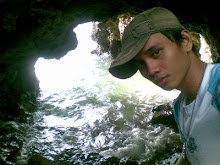
From my personal archives. June 2, 2006
Earth day was coming. I was reminded about this when I came across a newspaper article about the work of Theresa Calo.
A dedicated advocate of environmental protection,
Calo has helped hundreds of thousands of Filipinos reform, from being litterbugs to vanguards of Mother Earth. For the past three years, she has been to more than 1000 barangays around the country, teaching the people how to dispose of their garbage properly and prompting each local government to spearhead a zero-waste management program.
As an enthusiast of green living, I consider Calo a person in the ranks of national heroes and great social mavericks.
I am a self-professed environmentalist—a garbage collector to be exact. I gather post-consumer odds and ends as a pastime.
Let me just call myself “a garbage collector.” I’ve been scanning books for the right name for people who collect garbage as a hobby, but I couldn’t find any. Terms like “conservationist,” “Earth saver” and “nature lover” would do, but they are not so specific. I thought of coining my own description, which I decided should sound like “philatelist” (someone who collects stamps) or “numismatist” (a coin collector). However, I find words like “garbagist,” and “thrashist” not only politically incorrect but contradictory as well, since what I really promote is cleanliness.
If you find yourself in a bedroom that looks like a material recovery facility, chances are, you have stepped into my territory. I keep at home for several years now boxes of different sizes, each one containing a particular kind of used paraphernalia: plastic wrappers, empty bottles or scratch papers.
I carry with me the habit anywhere I go. A cornucopia of junks occupies one-fourth of my closet in the dorm and half of my locker in the office of our student publication.
The sight of my well-organized rubbish gives me a sense of accomplishment and de-stresses me, probably like the way shoes exhilarate Imelda Marcos and cars give pleasure to the Sultan of Brunei.
Several things awakened the environmentalist in me. I must have been enlightened when I came across the quotation,
“We did not inherit the Earth from our ancestors. We borrowed it from our children.” (Ironically, it was printed in a calendar given for free by a store that sells agricultural products, including soil-degrading fertilizers and ozone-depleting pesticides.) I also learned from science magazines the harmful effects to nature of human activities and what could happen in the future if those acts remain unabated. Filled with facts and figures, the predictions of the scientists that I read seemed so grim and imminent that they scared me more than the Book of Revelations did.
But the incident that really motivated me to save the Earth in my own little way was when I became an unwitting witness to a crime one night. A crime against nature, that is. My companions and I were then traveling back home in Isulan, Sultan Kudarat from a schools press conference in Tacloban City.
We were aboard a ferry across Surigao Strait, the body of water dividing Visayas and Mindanao, when I saw someone dump the contents of a large trashcan into the dark, open sea. The can was filled with empty styrofoam bowls of instant mami, one of which was mine.
I could not believe what the shipman did. I had trouble looking for that particular can because all the other cans had been overflowing with garbage, and he just emptied it into the sea without batting an eyelash! The next morning, I fully realized the gravity of what he did when my schoolmate and I went up the top deck for fresh air.
We saw a small school of whales wading through the sea. Only their backs and streaked dorsal fins were jutting out the water.
After the whales went out of our sight, two playful bottle-nosed dolphins leapt out of the water. I watched the pair with childlike amazement as they raced against each other in somersaults, only to be disheartened upon remembering what I witnessed the previous night.
Since after the trip, I decided to just store my trash inside my room. Though I do not practice recycling because I do not have the patience, creativity and any more time for that, I prefer not to give my personal scrap to the (official) garbage collectors for they just dump the town’s garbage in a landfill without using any segregation or recovery methods.
The editorial cartoon in the same issue of the newspaper shows the present condition of the Mother Earth. She is half-buried in the muck and mire of environmental problems, but there is hope that she will be saved. The artist drew a large hand extended to the Mother Earth and labeled it “environmentalists” and “Responsible citizens.” I believe, however that “Local government officials” should be included there.
Only through joint efforts of ordinary people and the leaders can the environment be best taken care of. Even the success of Calo would be impossible had it not been for the support of the local officials.
I never considered Earth Day of great significance. I didn’t see the point of celebrating when we still ravage the natural resources much faster than we can replenish them. But knowing about the success of Theresa Calo made me realize that there is something to celebrate. The cause is getting more popular as concerned citizens contribute in small ways.
The progress of environmentalists may be painfully slow, but the fight is never hopeless. ***(Excerpt from my pathetic letter to PDI: I passed this article before and I later realized that the way I wrote it was awful so I made a lot of changes and kept in mind some writing basics that I forgot to apply in the first one. I hope you give this article another chance and read it and consider publishing it.
PDI wasn't moved, but with more modifications, this was eventually published in a newsletter of a mining company where I work as a part-time writer)